How Do You Get Started Building a DC Microgrid?
A packed BICSI masterclass, a partnership between Cisco and Panduit, and the beginning of a shift from AC to DC power distribution in commercial buildings.
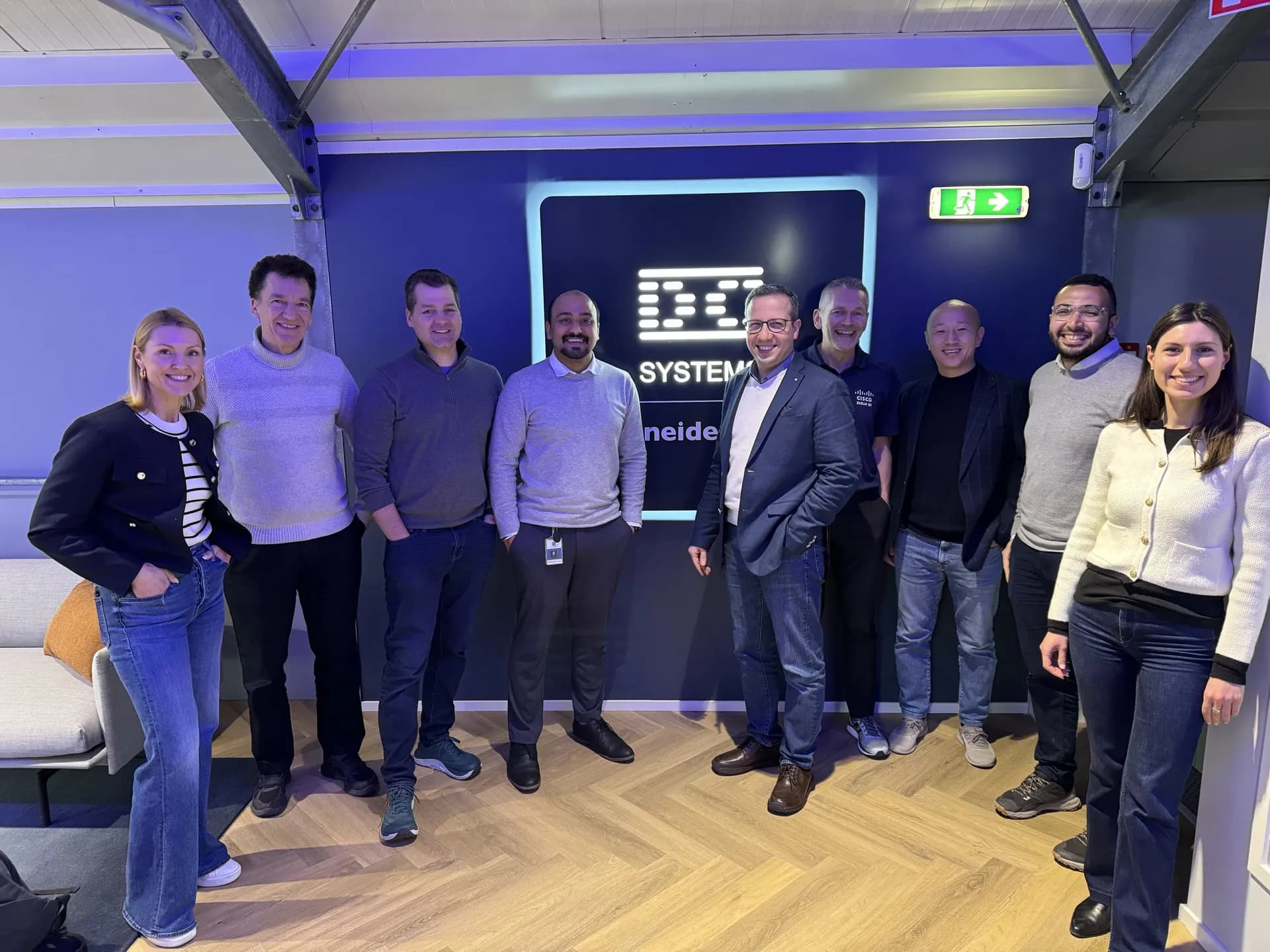
I was standing in front of a packed room at the BICSI Winter Conference in Orlando, crimpers in hand, explaining how to build a DC power network from scratch. Four hours, hands-on, no slides for the second half. Just boxes of gear, twisted pair cable, and a room full of ICT professionals who came to learn by doing.
The question that started it all was simple: how do you actually get started building a DC microgrid?
The Partnership
Cisco and Panduit teamed up to build a joint solution that takes 25 years of PoE innovation for last-mile power and data delivery over structured cabling and combines it with the latest in safe, efficient Class 4 DC power distribution.
Mahmoud Ibrahim from Panduit, Bob Voss, Vince Barone, and I designed the masterclass to walk attendees through the full picture... the why, the what, and the how. First two hours: design considerations, use cases, the NEC 2023 Class 4 definition. Second two hours: we broke open boxes and built power networks right there in the Gaylord Palms convention center.
There's something powerful about hands-on learning. You can read about Fault Managed Power all day, but the moment you crimp your first connector and see 350 volts of DC power safely delivered over 500 meters of twisted pair... it clicks differently.
Why DC? Why Now?
If you step back and look at a modern building, something absurd becomes obvious. Nearly every device that consumes power is DC native. Your laptop, your phone, your LED lights, your HVAC controls, your security cameras. All DC.
But we deliver power to them as AC, which means every single device has a little power supply converting AC to DC. And every conversion wastes energy as heat. In a large building with thousands of devices, those conversion losses add up to real money and real carbon.
Class 4 Fault Managed Power cuts through this by distributing DC power directly:
- Up to 2km power runs over cost-effective twisted pair conductors
- Faster deployment without conduit requirements (jurisdiction dependent)
- Arc-safe and UL listed — the system prevents shock and fire hazard at the hardware level
- Native integration with on-site solar and battery storage, which are already DC
That last point is the one that gets building owners excited. If you have solar panels on the roof generating DC power and batteries in the basement storing DC power... why convert to AC for distribution just to convert back to DC at every endpoint? A DC microgrid eliminates those conversion stages entirely.
PoE and FMP: Complements, Not Competitors
One thing I emphasize in every conversation: Fault Managed Power doesn't replace PoE. They're complementary.
PoE handles the last mile... powering and connecting endpoints like cameras, access points, sensors, and lighting fixtures through the same Ethernet cable that carries their data. FMP handles the distribution backbone... delivering high-power DC from the building's electrical room to floors, wings, or even across a campus.
Think of it like this: FMP is the highway, PoE is the local road. You need both for a complete transportation network.
Where This Is Heading
After Amsterdam, Austin, Denver, and Orlando, I've had hundreds of conversations with MEP firms, integrators, building owners, and architects about this technology. The momentum is real. The questions have shifted from "what is this?" to "how do I specify this in my next project?"
The era of rethinking how we power buildings has started. And it starts with a simple question: if everything in your building runs on DC, why are you still distributing AC?